7 Things I Wish I Knew Before Baking My Grandpa's Cake
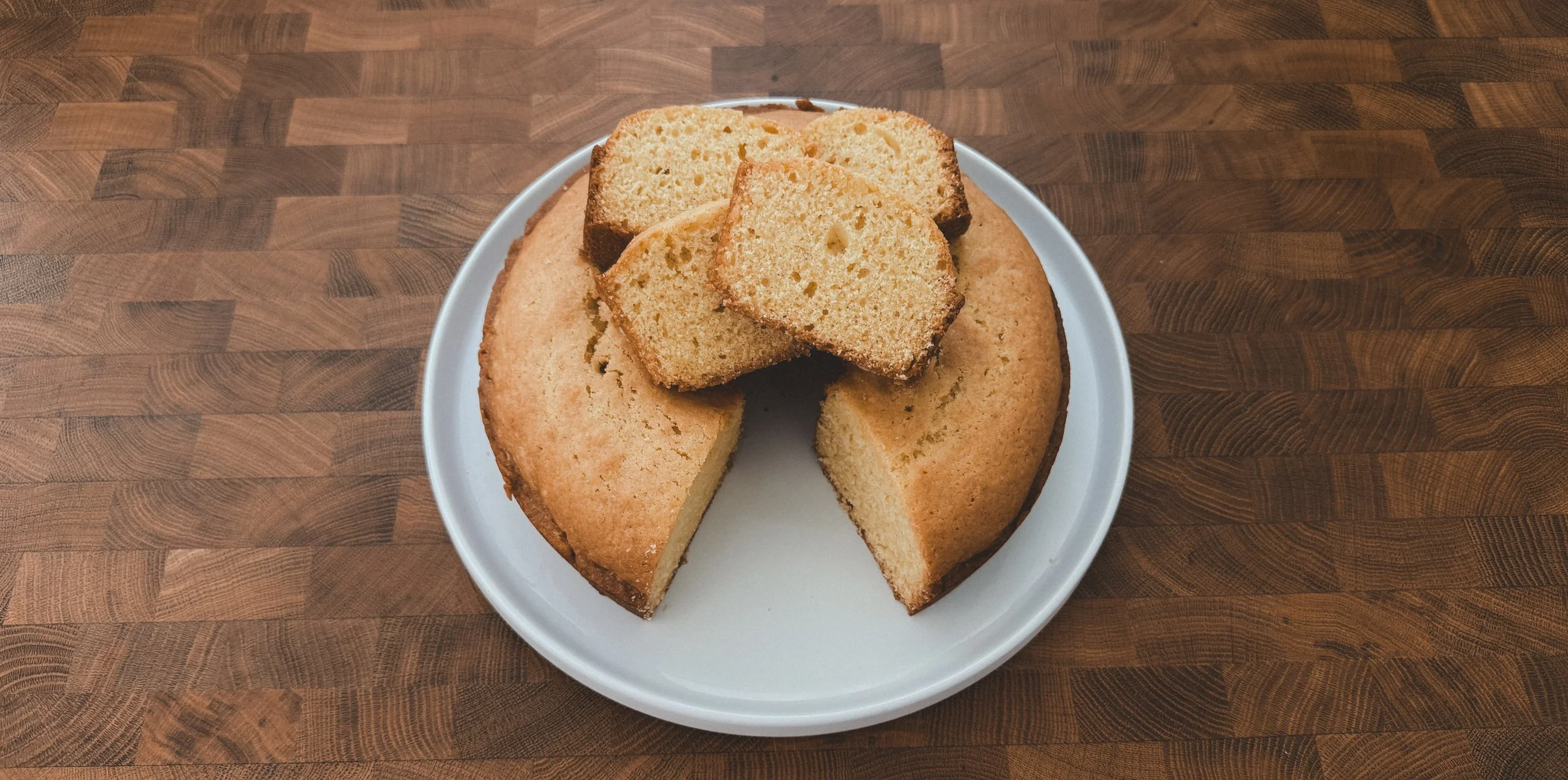
The tips that actually make this recipe work, learned the hard way.
Let's Begin Here
There's a particular kind of pressure that comes with baking someone else's recipe.
Not a recipe you found online or pulled from a cookbook you've been meaning to use. Someone's recipe. A person's recipe. The kind that exists in memory more than on paper, that carries the weight of every time it was made before you tried to make it yourself.
My grandpa, who I called Ye Ye, made a birthday cake for every celebration in our family. Every single one. It was always the same cake. Light, simple, no frills. Made by his hands on the days that mattered most. I can still picture his patio, the table where everything happened, the sound of his old hand mixer running. That warm motor smell it gave off when it ran. That smell is just pure childhood to me.
When I finally decided to recreate this cake from memory I thought I understood what I was getting into. I had the ingredients. I had a general sense of the process. I had watched him make it enough times that I felt like I knew what to do.
What I didn't have was the specific technical knowledge that makes the difference between a cake that turns out the way you imagined and one that teaches you something instead.
This cake is not complicated. But it has a few moments that require more attention than they appear to. I found that out the way most of us find things out in the kitchen. By doing it, getting something wrong, and then understanding why.
What I'm sharing here are the seven things I wish I had known before I started. The tips that actually make this recipe work. The moments where paying closer attention changed the outcome. Learned the hard way so you don't have to.
If you haven't grabbed the full recipe yet it's right here on the blog. Come back to this post when you're ready to bake and keep it open while you work through each step.
The Tips
Tip one: Soften your butter the right way
Before anything else happens the butter needs to be at the right temperature. This sounds like a small thing and it isn't.
Softened butter is not melted butter and it's not cold butter straight from the fridge. Softened means your finger leaves a clean indent when you press it but the butter still holds its shape. It should feel pliable and yielding without looking greasy or shiny. If the butter is too cold it won't cream properly no matter how long you run the mixer. If it's too warm it won't hold the air you're trying to build into it.
“Too cold and it won’t cream. Too warm and it won’t hold air. The window in between is where the magic lives.”
If you forgot to take it out ahead of time, cut it into small cubes and let them sit on the counter for about twenty minutes. That's usually enough to get you where you need to be. And if you're using salted butter, skip the added salt in the recipe entirely. The butter will carry enough on its own.
Tip two: Don't rush the creaming step
This is the step most people cut short and it's the one that sets the tone for everything that follows.
Cream the butter and sugar together on medium high speed for three to five full minutes. Not one minute. Not two. Three to five. You're looking for the mixture to turn almost white and feel noticeably lighter and fluffier than when you started. Most people stop when it still looks pale yellow and slightly grainy because it looks like it's done. It isn't.
“That change in color and texture is air going into the batter. That air is what lifts the cake.”
Give it the full time. Set a timer if it helps. The creaming step is building the foundation that everything else in this recipe depends on and it's worth every extra minute.
Tip three: The curdled look is completely normal
When you add the milk, lemon juice, and lemon zest to the creamed butter and yolks the mixture is going to look a little off. Slightly curdled. Like something went wrong.
Nothing went wrong.
“That’s just the fat and the liquid getting acquainted before the flour brings everything back together.”
Set it aside and move on to your dry ingredients. Once the flour goes in the mixture comes right back together and you'll wonder why you were worried in the first place. This is one of those moments in baking where trusting the process is the whole job.
Tip four: Mix gently and stop when it just comes together
When you add the dry ingredients into the wet base, mix in the first half and then the second. The key word here is gently. And the most important instruction in this whole step is to stop as soon as the flour is just incorporated.
Overmixing builds gluten. Gluten is what gives bread its beautiful chew and structure, which is exactly what you want in bread and exactly what you don't want in a light cake like this one. The less you work the batter here the lighter the cake will be. A few streaks of flour in the batter at this stage are completely fine. They'll sort themselves out when the egg whites go in.
Mix gently, stop early, and move on.
Tip five: Watch your egg whites closely in those final moments
This is where the most important transformation in the whole recipe happens and it's the one that requires the most attention.
Start the whites on medium speed until they look foamy and opaque. Then take the speed up to high. Watch what happens. They go from translucent and liquid to bright white and cloud-like. The whole texture transforms in front of you.
You're looking for stiff peaks. When you lift the beater the white should hold a point that stands straight up without drooping at all. The surface should look silky and glossy, almost like shaving cream. Bright white and smooth and holding its shape cleanly.
“Silky and glossy like shaving cream means you’re there. Dull and chunky like cottage cheese means you’ve gone too far.”
The window between perfectly whipped and overwhipped is shorter than you think, especially on high speed. Stop the mixer every thirty seconds in those final moments and do the lift test. Once you see stiff glossy peaks stop immediately. Don't give it another pass. Get those whites into the batter before anything changes.
Tip six: Butter your pan well before the batter goes in
This one is easy to overlook and easy to regret.
A light batter like this one sticks more than a dense one. There's less weight pressing it away from the sides and bottom of the pan which means it clings. Take a moment to butter your pan properly before the batter goes in.
“A light batter loves a well greased pan. Take the moment to do this one right and the cake will come out cleanly every time.”
A 9-inch round pan works best for this recipe. A bundt pan also works beautifully if that's what you have. Either way, butter it well before anything goes in.
Tip seven: Let it cool completely before you cut it
I know. The cake is out of the oven and it smells incredible and every part of you wants to cut into it right now. Wait.
A light cake like this one is still setting as it cools. The structure is still firming up inside even after it comes out of the oven. Cut into it while it's still warm and the crumb will compress, the layers will tear, and the texture will feel denser than it actually is. None of that is the recipe's fault. It just needed more time.
“Let it sit on a wire rack for at least an hour before you touch it. The wait is part of the bake.”
When you're ready to cut, use a long serrated knife. Score around the outside first to mark your cutting line. Then use slow, steady sawing motions and let the knife do the work. Don't press down. The weight of the knife is enough.
Before You Go
My grandpa never talked about any of this. He didn't explain the creaming step or warn me about the curdled look or tell me to watch the egg whites in those final thirty seconds. He just made the cake. Every birthday. With the quiet confidence that comes from having made something so many times that your hands know what to do before your mind has to think about it.
That's where I'm trying to get. Not to perfection. To familiarity. To the place where this recipe lives in my hands the way it lived in his.
These tips are the things I learned on the way there. The moments where paying closer attention changed the outcome. The knowledge that comes from doing it, getting something wrong, and understanding why.
“That’s how baking works. You make the cake, you notice what happened, and you carry that forward into the next one. Slowly, over time, the recipe becomes yours.”
Keep this post open the first time you make this cake. Check in at each of the seven moments. You don't need to memorize anything. You just need to know what to look for when you get there.
And when you finally cut into it and see that soft, open crumb, know that every step you took to get there was worth it.
“That’s the whole point. Not just the result. The whole journey of getting there.”
